Branding
Web & Design Services
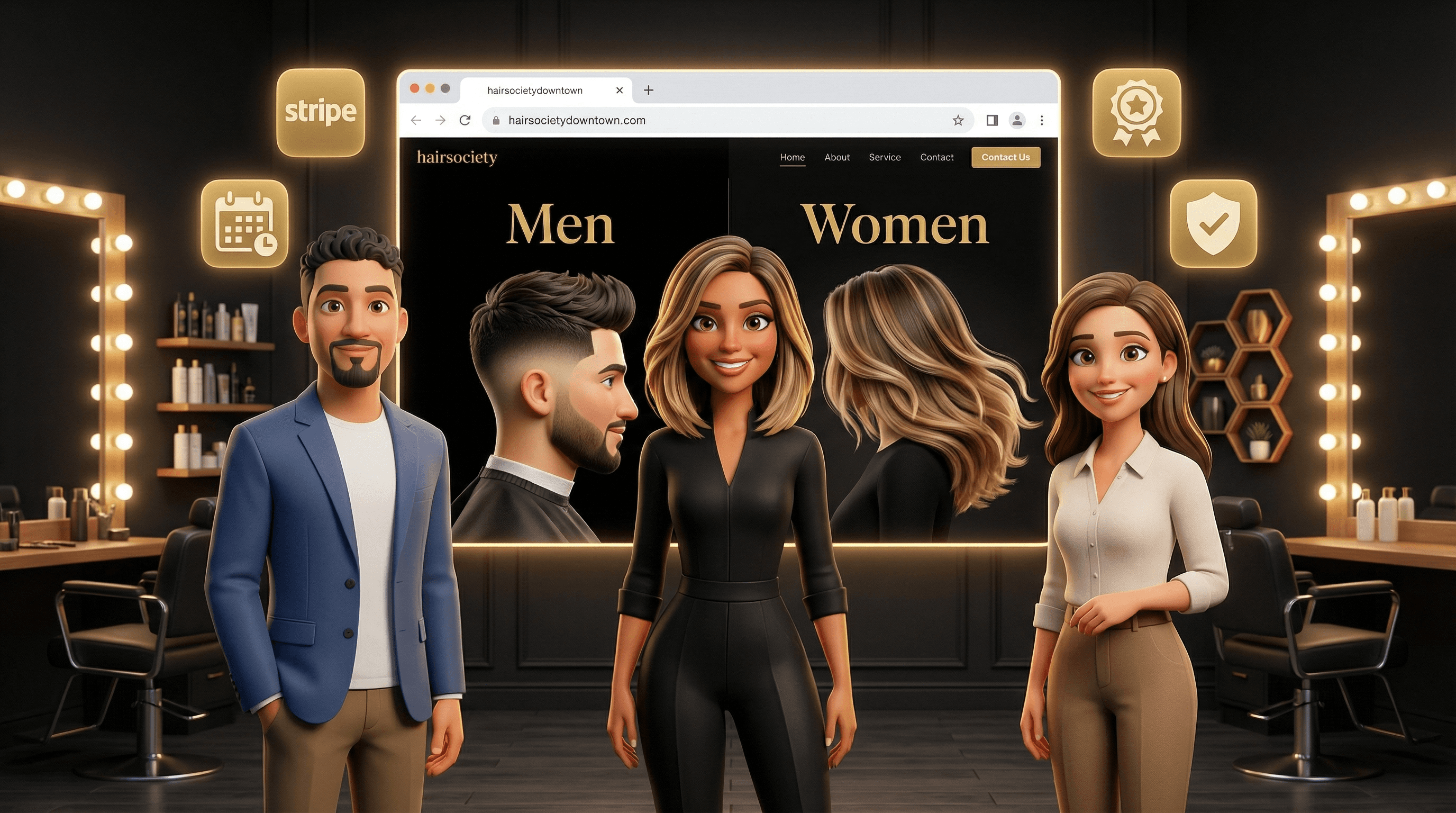
A full-service barbershop website built to book, convert, and own — black and gold, Fort Worth sharp.
Year :
2024
Industry :
Beauty
Client :
Hair Stylist
Project Duration :
21 Weeks
Problem :
Most small businesses treat their website like a flyer they stapled to a telephone pole. It exists. Nobody's really maintaining it. And it definitely wasn't built with the backend in mind.
Here's what that actually costs you: 61% of people will leave your site and go to a competitor if they can't find what they're looking for within five seconds. Wix 75% of people decide whether or not to trust your business based on how your website looks. Sixth City Marketing That's not a marketing problem — that's a first impression problem. And first impressions online happen faster than you can blink.
The issues I see over and over are the same ones: a landing page with no clear next step, a contact form that doesn't actually connect to anything, a site that looks fine on a desktop but falls apart on a phone. The most common design mistakes are cluttered layouts, no call to action, and hidden navigation Brevo — and most owners don't even know those things are costing them customers. Add in no SSL certificate, no privacy policy, no terms of service, and now you've got a legal exposure problem on top of a design problem.
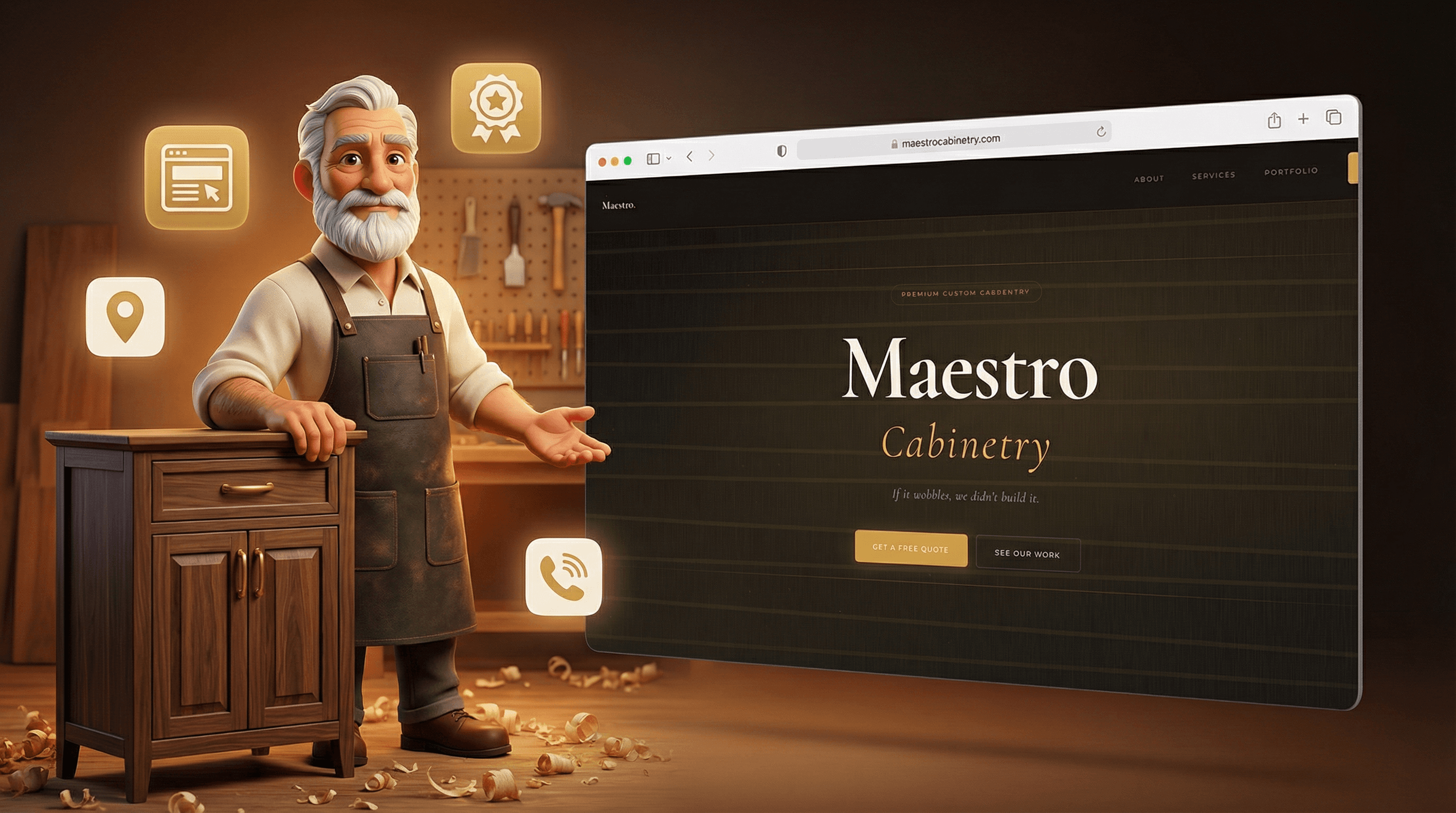
Not every website is the same. A barbershop needs booking and availability. A cabinet company needs a portfolio that earns trust before anyone picks up the phone. A product business needs a backend that doesn't crash when someone tries to check out. Building the wrong kind of site for your business is just as bad as not having one at all.
Solution :
Every website situation is different, but the starting point is always the same — figure out what your business actually needs before we build anything. A portfolio site for a contractor is a completely different project than an e-commerce store or a booking system for a service business. Getting that wrong from the jump means rebuilding it later, and nobody wants that conversation.
If you're the type who wants to be hands-on and learn as you go, the most important thing you can do right now is learn how to structure your project correctly from day one. If you're using AI tools or GitHub to help build — great, use them. But make sure your .env files are set up to keep your API keys and credentials out of your code, and that your .gitignore is configured so you're not accidentally pushing sensitive information to a public repository. These are the kinds of mistakes that seem small until they aren't.
Beyond the technical side, your website needs to speak the same language as the rest of your brand. Your colors, your tone, your offer — if someone sees your Instagram and then lands on your site and it feels like two different businesses, you've already lost them. Design and marketing have to move together, not separately.
For clients who'd rather hand it off and have it done right the first time, that's what we're here for — built clean, secured properly, and aligned with how you actually want to grow.
Challenge :
The hardest part of web design isn't the design — it's getting people to take it seriously before something goes wrong. Most business owners come to the table after the fact. The site's already live, it's already losing them customers, and now it needs to be rebuilt instead of built right the first time.
The other challenge is scope creep disguised as simplicity. "I just need a basic website" is the most common thing I hear — and it's almost never true once we start talking about what the business actually does. You need contact forms that go somewhere. You need a mobile experience that doesn't embarrass you. You need legal pages that protect you if a customer ever decides to get difficult. None of that is complicated, but none of it is "just a basic website" either.
And then there's the brand alignment problem. 38% of people will stop engaging with a website if the content or layout feels off not broken, just off. If your site doesn't match the energy of your business, people feel it before they can explain it. That disconnect is quiet but expensive.
Summary :
You don't need the most expensive website on the internet. You need one that works, looks like it belongs to a real business, and doesn't create problems for you six months from now.
If you want to build it yourself, start with the structure — folders organized correctly, credentials protected, version control set up before you write a single line of code. That discipline alone puts you ahead of most people who try to DIY their way through it.
If you'd rather bring someone in, the process starts with a real conversation about what your business needs — not a template thrown at your logo and called a day. Every site we build is tied to how you market, how you sell, and how you want customers to feel when they land on it. Clean, secure, and built to grow with you.
Either way, you walk away with something that actually works.

More Projects


Branding
Web & Design Services
A full-service barbershop website built to book, convert, and own — black and gold, Fort Worth sharp.
Year :
2024
Industry :
Beauty
Client :
Hair Stylist
Project Duration :
21 Weeks
Problem :
Most small businesses treat their website like a flyer they stapled to a telephone pole. It exists. Nobody's really maintaining it. And it definitely wasn't built with the backend in mind.
Here's what that actually costs you: 61% of people will leave your site and go to a competitor if they can't find what they're looking for within five seconds. Wix 75% of people decide whether or not to trust your business based on how your website looks. Sixth City Marketing That's not a marketing problem — that's a first impression problem. And first impressions online happen faster than you can blink.
The issues I see over and over are the same ones: a landing page with no clear next step, a contact form that doesn't actually connect to anything, a site that looks fine on a desktop but falls apart on a phone. The most common design mistakes are cluttered layouts, no call to action, and hidden navigation Brevo — and most owners don't even know those things are costing them customers. Add in no SSL certificate, no privacy policy, no terms of service, and now you've got a legal exposure problem on top of a design problem.
Not every website is the same. A barbershop needs booking and availability. A cabinet company needs a portfolio that earns trust before anyone picks up the phone. A product business needs a backend that doesn't crash when someone tries to check out. Building the wrong kind of site for your business is just as bad as not having one at all.
Solution :
Every website situation is different, but the starting point is always the same — figure out what your business actually needs before we build anything. A portfolio site for a contractor is a completely different project than an e-commerce store or a booking system for a service business. Getting that wrong from the jump means rebuilding it later, and nobody wants that conversation.
If you're the type who wants to be hands-on and learn as you go, the most important thing you can do right now is learn how to structure your project correctly from day one. If you're using AI tools or GitHub to help build — great, use them. But make sure your .env files are set up to keep your API keys and credentials out of your code, and that your .gitignore is configured so you're not accidentally pushing sensitive information to a public repository. These are the kinds of mistakes that seem small until they aren't.
Beyond the technical side, your website needs to speak the same language as the rest of your brand. Your colors, your tone, your offer — if someone sees your Instagram and then lands on your site and it feels like two different businesses, you've already lost them. Design and marketing have to move together, not separately.
For clients who'd rather hand it off and have it done right the first time, that's what we're here for — built clean, secured properly, and aligned with how you actually want to grow.
Challenge :
The hardest part of web design isn't the design — it's getting people to take it seriously before something goes wrong. Most business owners come to the table after the fact. The site's already live, it's already losing them customers, and now it needs to be rebuilt instead of built right the first time.
The other challenge is scope creep disguised as simplicity. "I just need a basic website" is the most common thing I hear — and it's almost never true once we start talking about what the business actually does. You need contact forms that go somewhere. You need a mobile experience that doesn't embarrass you. You need legal pages that protect you if a customer ever decides to get difficult. None of that is complicated, but none of it is "just a basic website" either.
And then there's the brand alignment problem. 38% of people will stop engaging with a website if the content or layout feels off not broken, just off. If your site doesn't match the energy of your business, people feel it before they can explain it. That disconnect is quiet but expensive.
Summary :
You don't need the most expensive website on the internet. You need one that works, looks like it belongs to a real business, and doesn't create problems for you six months from now.
If you want to build it yourself, start with the structure — folders organized correctly, credentials protected, version control set up before you write a single line of code. That discipline alone puts you ahead of most people who try to DIY their way through it.
If you'd rather bring someone in, the process starts with a real conversation about what your business needs — not a template thrown at your logo and called a day. Every site we build is tied to how you market, how you sell, and how you want customers to feel when they land on it. Clean, secure, and built to grow with you.
Either way, you walk away with something that actually works.
More Projects
Branding
Web & Design Services
A full-service barbershop website built to book, convert, and own — black and gold, Fort Worth sharp.
Year :
2024
Industry :
Beauty
Client :
Hair Stylist
Project Duration :
21 Weeks
Problem :
Most small businesses treat their website like a flyer they stapled to a telephone pole. It exists. Nobody's really maintaining it. And it definitely wasn't built with the backend in mind.
Here's what that actually costs you: 61% of people will leave your site and go to a competitor if they can't find what they're looking for within five seconds. Wix 75% of people decide whether or not to trust your business based on how your website looks. Sixth City Marketing That's not a marketing problem — that's a first impression problem. And first impressions online happen faster than you can blink.
The issues I see over and over are the same ones: a landing page with no clear next step, a contact form that doesn't actually connect to anything, a site that looks fine on a desktop but falls apart on a phone. The most common design mistakes are cluttered layouts, no call to action, and hidden navigation Brevo — and most owners don't even know those things are costing them customers. Add in no SSL certificate, no privacy policy, no terms of service, and now you've got a legal exposure problem on top of a design problem.
Not every website is the same. A barbershop needs booking and availability. A cabinet company needs a portfolio that earns trust before anyone picks up the phone. A product business needs a backend that doesn't crash when someone tries to check out. Building the wrong kind of site for your business is just as bad as not having one at all.
Solution :
Every website situation is different, but the starting point is always the same — figure out what your business actually needs before we build anything. A portfolio site for a contractor is a completely different project than an e-commerce store or a booking system for a service business. Getting that wrong from the jump means rebuilding it later, and nobody wants that conversation.
If you're the type who wants to be hands-on and learn as you go, the most important thing you can do right now is learn how to structure your project correctly from day one. If you're using AI tools or GitHub to help build — great, use them. But make sure your .env files are set up to keep your API keys and credentials out of your code, and that your .gitignore is configured so you're not accidentally pushing sensitive information to a public repository. These are the kinds of mistakes that seem small until they aren't.
Beyond the technical side, your website needs to speak the same language as the rest of your brand. Your colors, your tone, your offer — if someone sees your Instagram and then lands on your site and it feels like two different businesses, you've already lost them. Design and marketing have to move together, not separately.
For clients who'd rather hand it off and have it done right the first time, that's what we're here for — built clean, secured properly, and aligned with how you actually want to grow.
Challenge :
The hardest part of web design isn't the design — it's getting people to take it seriously before something goes wrong. Most business owners come to the table after the fact. The site's already live, it's already losing them customers, and now it needs to be rebuilt instead of built right the first time.
The other challenge is scope creep disguised as simplicity. "I just need a basic website" is the most common thing I hear — and it's almost never true once we start talking about what the business actually does. You need contact forms that go somewhere. You need a mobile experience that doesn't embarrass you. You need legal pages that protect you if a customer ever decides to get difficult. None of that is complicated, but none of it is "just a basic website" either.
And then there's the brand alignment problem. 38% of people will stop engaging with a website if the content or layout feels off not broken, just off. If your site doesn't match the energy of your business, people feel it before they can explain it. That disconnect is quiet but expensive.
Summary :
You don't need the most expensive website on the internet. You need one that works, looks like it belongs to a real business, and doesn't create problems for you six months from now.
If you want to build it yourself, start with the structure — folders organized correctly, credentials protected, version control set up before you write a single line of code. That discipline alone puts you ahead of most people who try to DIY their way through it.
If you'd rather bring someone in, the process starts with a real conversation about what your business needs — not a template thrown at your logo and called a day. Every site we build is tied to how you market, how you sell, and how you want customers to feel when they land on it. Clean, secure, and built to grow with you.
Either way, you walk away with something that actually works.